
Blog Details

The Magical Sundarban Forest
The Sundarbans is a land of wonder where nature whispers its ancient secrets through tidal rivers
Two Colorful Stars of the Mangroves
The Sundarbans, the world’s largest mangrove forest, is not only a sanctuary for the majestic Bengal Tiger but also a paradise for bird enthusiasts. With more than 300 bird s...
Dubla Islan: Life of the the fishermen
Dubla Island, located at the southern edge of the Sundarbans where the Bay of Bengal meets the largest mangrove forest on Earth, is a world of its own—remote, raw, and breath...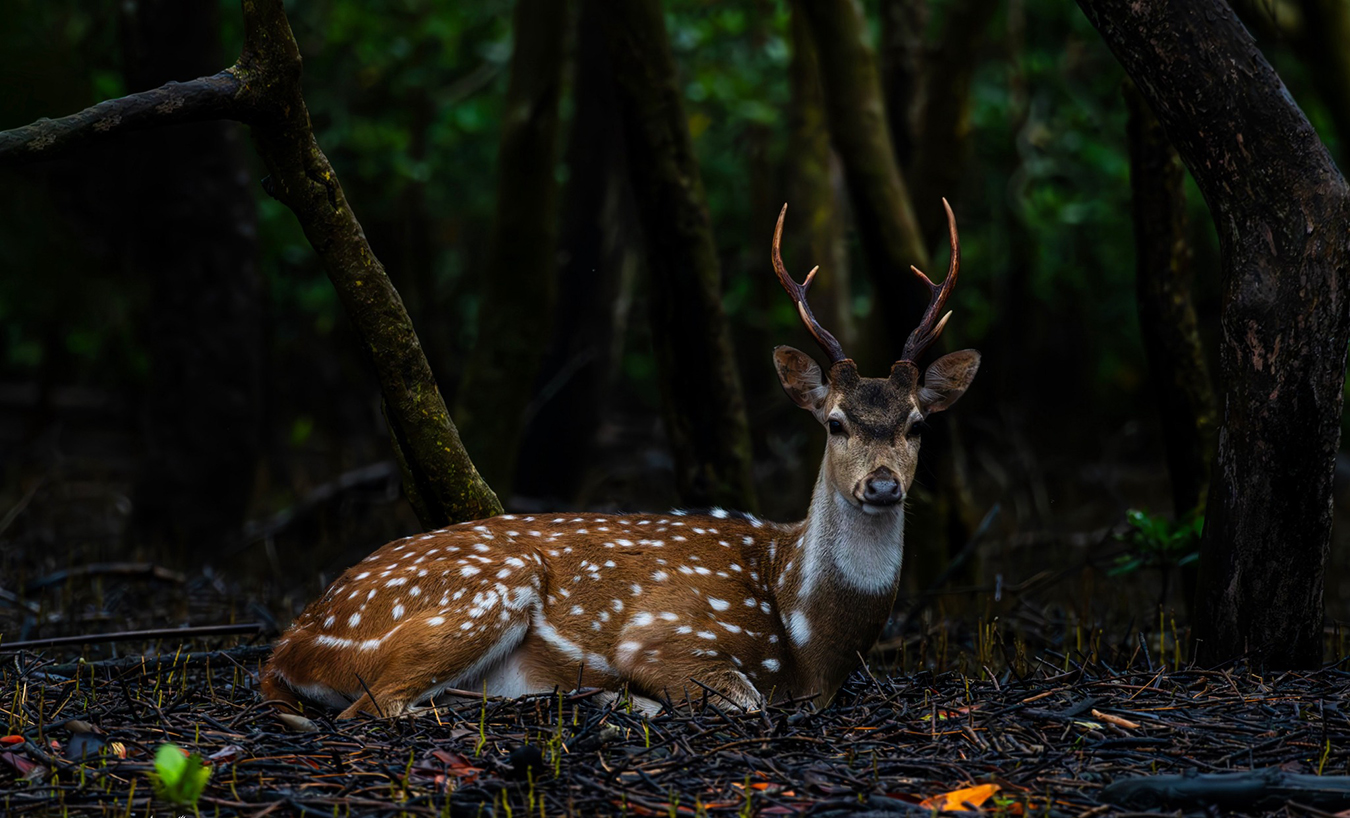
Spotted Deer: The Jewel of the Sundarbans
The Spotted Deer, locally known as Chital, is one of the most graceful and iconic inhabitants of the Sundarbans. With its golden-brown coat adorned with delicate white spots, this...
Kalabogi: The untold sorrows
Kalabogi is a small river-bound village standing quietly at the edge of the Sundarbans, carrying a history of loss, resilience, and silent endurance. Once connected to the mainland...Search
Categories
Latest News
-
Kalabogi: The untold sorr...
31 Oct 2025 -
Spotted Deer: The Jewel o...
31 Oct 2025 -
Dubla Islan: Life of the...
31 Oct 2025
Our Projects
Archives
Popular Tags
Spotted Deer: The Jewel of the Sundarbans
The Spotted Deer, locally known as Chital, is one of the most graceful and iconic inhabitants of the Sundarbans. With its golden-brown coat adorned with delicate white spots, this elegant herbivore moves through the mangrove forest like a living ornament, earning its place as the true jewel of the Sundarbans. Unlike many other forest ecosystems, the Sundarbans presents a challenging environment shaped by tides, salinity, and dense mangrove vegetation. Yet, the Spotted Deer has adapted remarkably well to this unique landscape, thriving along riverbanks, grassy clearings, and forest edges. Their presence not only adds beauty to the forest but also reflects the ecological balance that sustains life in this fragile mangrove world.
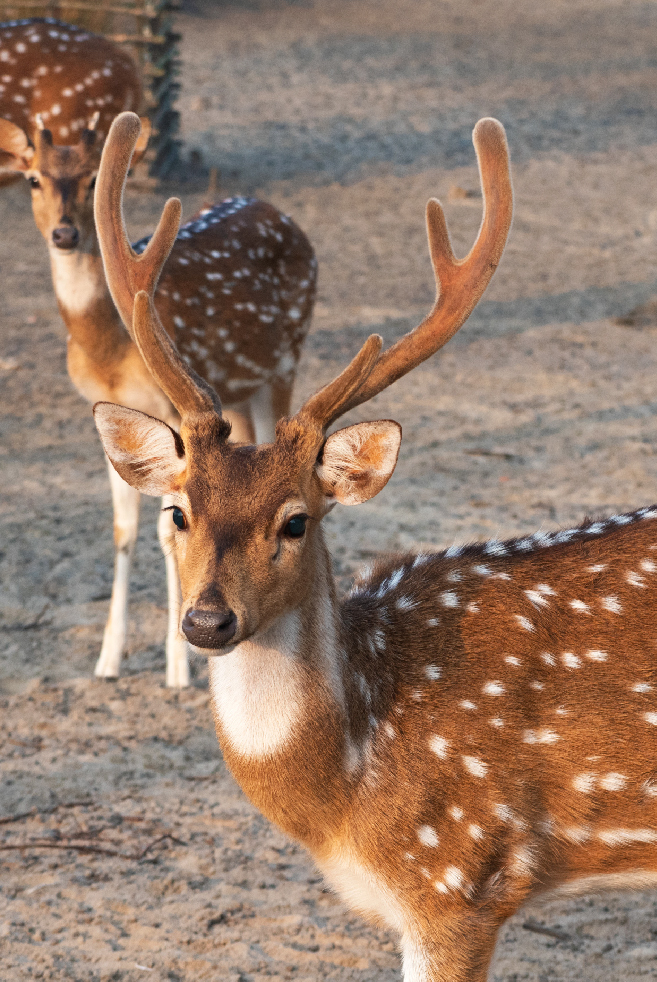
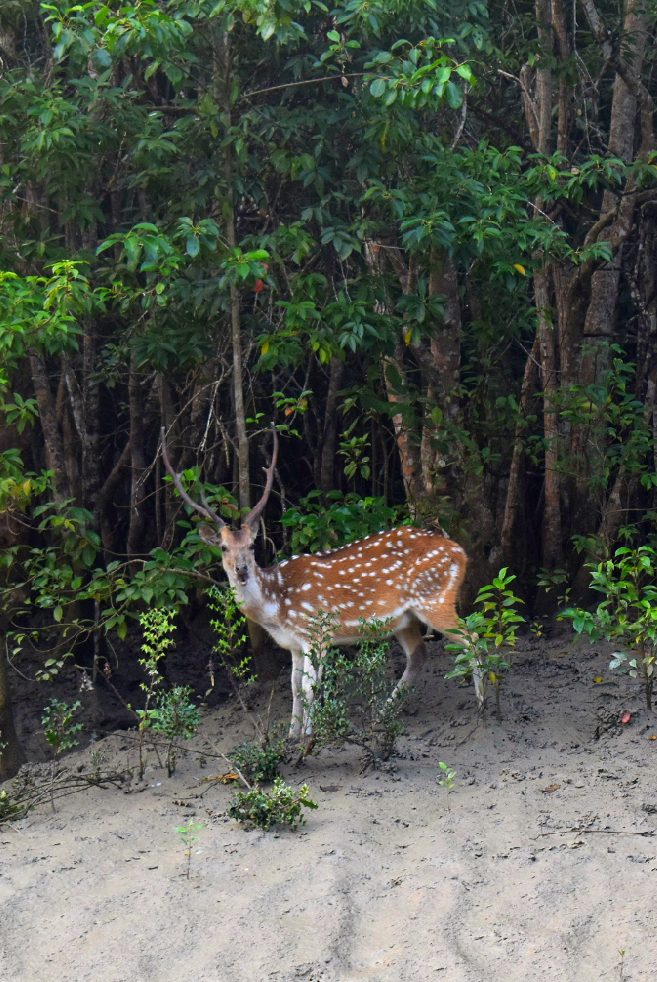
Spotted Deer are highly social animals, often seen grazing in small to large herds, particularly during early mornings and late afternoons. These herds play a crucial role in the forest’s ecosystem by maintaining vegetation growth and supporting nutrient cycling. Their diet consists mainly of grasses, leaves, fallen fruits, and mangrove shoots, making them essential contributors to the forest’s food web. More importantly, Spotted Deer are a primary prey species for the Royal Bengal Tiger, the apex predator of the Sundarbans. The survival of tigers is closely linked to the health of deer populations, making the Spotted Deer a keystone species in the ecosystem. Their sharp senses and alert behavior—constantly scanning their surroundings and responding quickly to danger—add a dynamic rhythm to the forest, signaling the presence of predators and enhancing the forest’s natural balance.
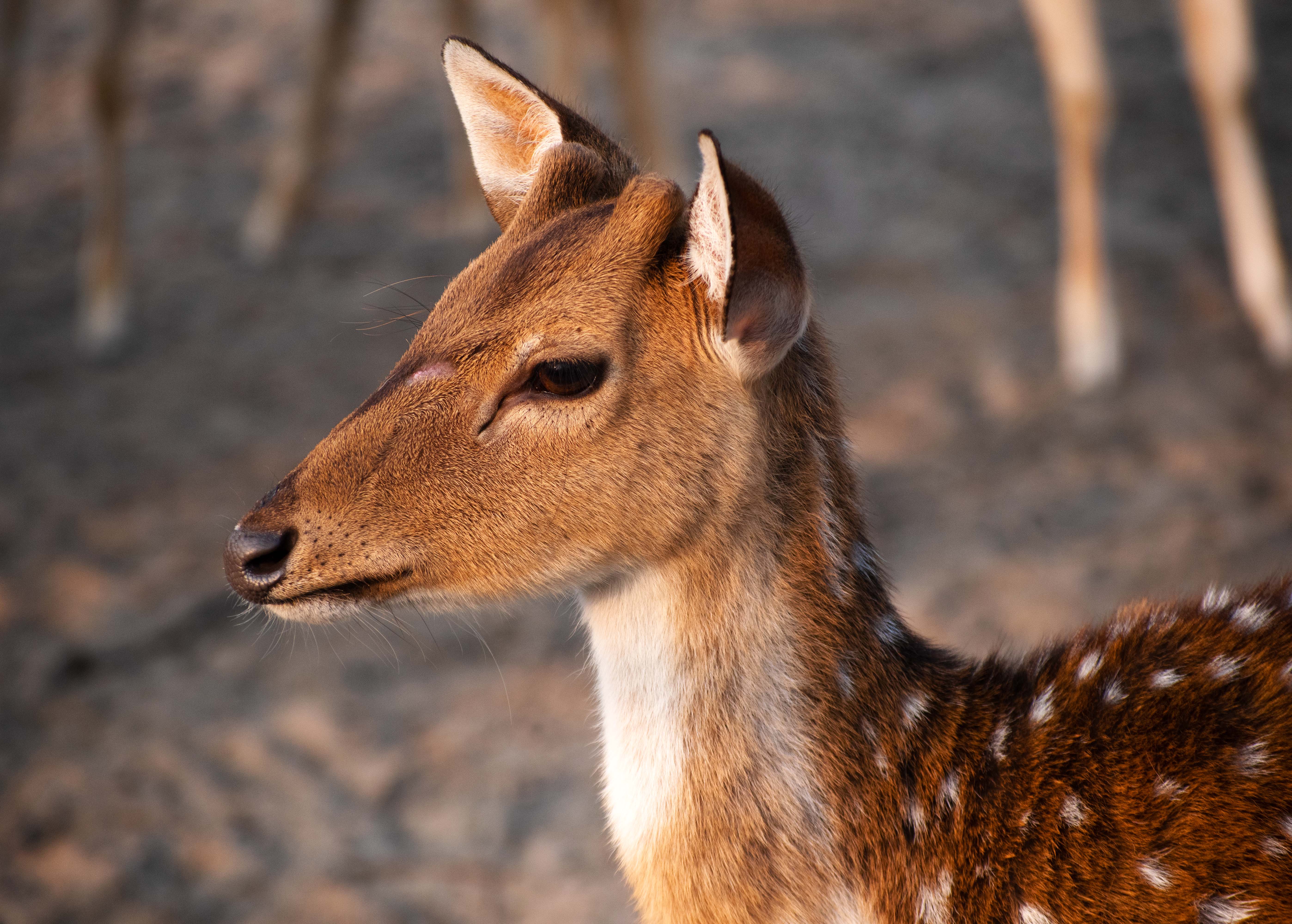
Beyond their ecological importance, Spotted Deer also hold cultural and symbolic significance in the Sundarbans. For centuries, local communities living near the forest have respected these animals as a vital part of the forest’s spirit. Fishermen, honey collectors, and wood gatherers often view deer sightings as a sign of good fortune, while also recognizing the risks that accompany such encounters, as deer presence may indicate nearby tigers. Visitors to the Sundarbans frequently describe moments of silent awe when watching a herd of deer emerge from the mangroves to drink from the river’s edge. The sight of their reflections shimmering on the water, combined with the quiet stillness of the forest, creates unforgettable experiences that define Sundarbans wildlife tourism. For nature photographers and wildlife enthusiasts, capturing the gentle movements and alert expressions of Spotted Deer is one of the most rewarding moments of any expedition.
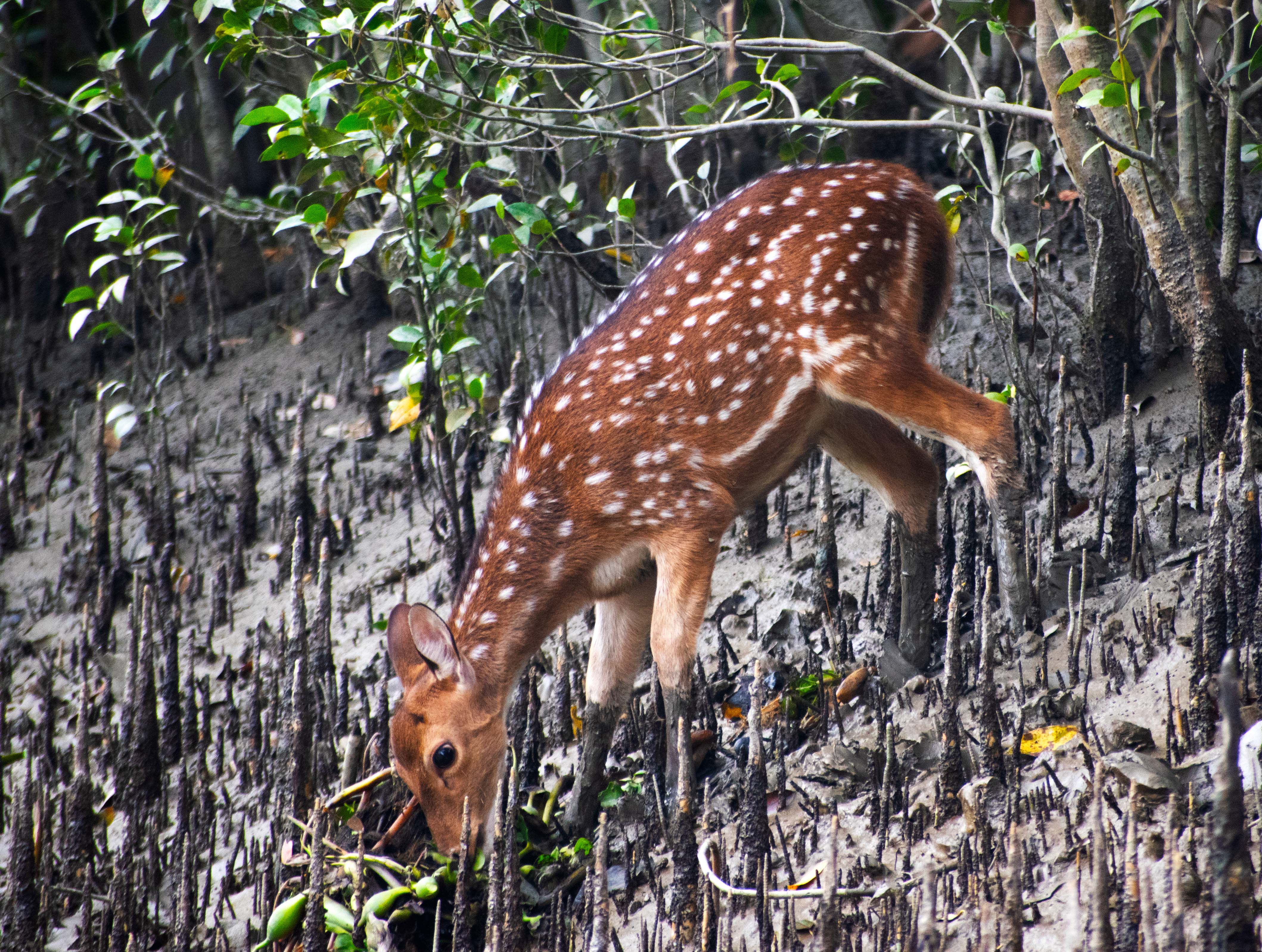
However, the future of the Spotted Deer in the Sundarbans is closely tied to conservation efforts and environmental stability. Rising salinity, habitat degradation, climate change, and occasional human-wildlife conflict pose ongoing challenges to their survival. Protecting grazing areas, ensuring freshwater availability, and maintaining healthy forest corridors are essential for sustaining deer populations. Conservation initiatives, responsible ecotourism, and community awareness play a vital role in preserving this species and its habitat. The Spotted Deer is more than just a beautiful animal—it is a symbol of the Sundarbans’ resilience, harmony, and wild soul. As long as these graceful creatures continue to roam the mangrove forests, the Sundarbans will remain alive with the beauty and balance that make it one of the world’s most extraordinary natural landscapes.

Lincon Mondal
About AuthorLincon Mondal is an enthusiastic explorer of the Magical Sundarbans Forest, an expert eco-guide, passionate amateur wildlife photographer, and ecotourism entrepreneur from Bangladesh. With years of hands-on experience in the Sundarbans, he specializes in organizing tailored nature trips, exclusive expeditions, research journeys, and providing full logistical support for documentaries and filmmaking projects. Deeply committed to responsible ecotourism and conservation, Lincon shares authentic stories, wildlife insights, and real forest experiences to inspire true nature lovers to understand and respect the world’s largest mangrove forest.
Leave A Comment
No comments yet. Be the first to comment!
Search
Categories
Latest News
-
Kalabogi: The untold sorr...
31 Oct 2025 -
Spotted Deer: The Jewel o...
31 Oct 2025 -
Dubla Islan: Life of the...
31 Oct 2025